
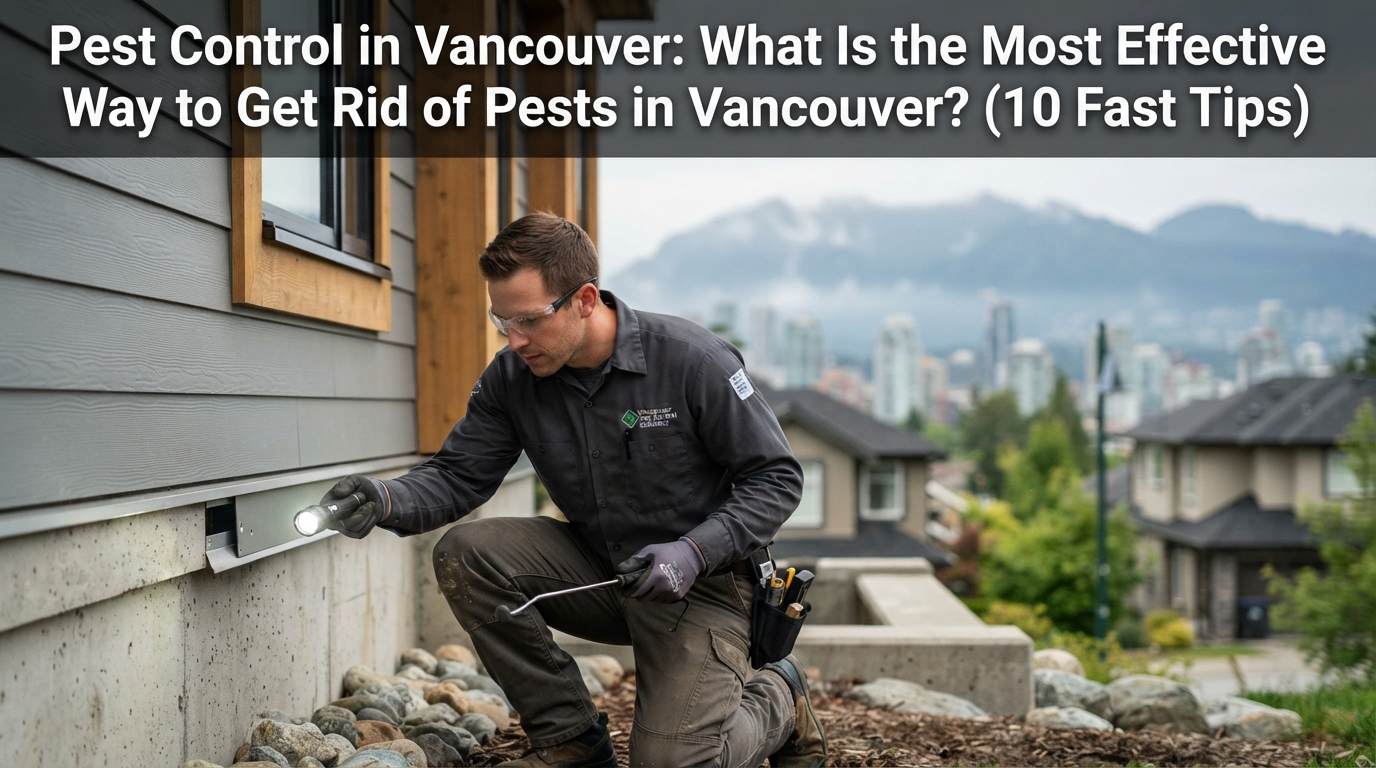
Honestly, the most effective pest control Vancouver homeowners can find isn’t a single spray or trap; it’s a combo of correct identification, targeted treatment (baiting, exclusion, or heat depending on the pest), and sealing up the entry points so they don’t come back. DIY products buy you time, not a solution. If you’re seeing real activity, get a licensed technician within 24-48 hours.
If your home was built before 1980 and a lot of Vancouver’s housing stock was, pest control isn’t really optional here; it’s maintenance. Between the rain, the mild winters, and all that older wood-frame construction you see around Kitsilano and East Van, pests find their way almost year-round. Getting rid of them for good means matching the method to the pest, not just grabbing whatever’s on the shelf at the hardware store; this is exactly where pest control Vancouver experts bring the real difference.
Here are 10 tips that actually hold up, the same things licensed technicians do differently from what most people try on their own.
Why Does Vancouver Have So Much Pest Activity?
The weather never really lets up. Vancouver’s coastal climate keeps things humid and mild, so pests don’t die off over winter the way they would in, say, Winnipeg or Calgary. Rats and mice start moving indoors the moment it dips below 10°C, and that gives the city one of the longest active pest seasons in Canada, close to 10 months out of 12.
There’s also the housing angle. A lot of older Vancouver homes have small gaps around the foundation, vents, or roofline that were never sealed to today’s standards. A rat needs a gap the size of a quarter to get in. A mouse needs even less.
What Pests Show Up Most in Vancouver Homes?
Rats and mice top the list, followed by ants, wasps, and bed bugs. That’s roughly the order homeowners report them in, and rodent complaints specifically spike every October through February once the cold pushes them indoors.
Here’s a rough guide to what shows up and when:
| Pest | Peak Season | Typical Sign |
| Rats/Mice | Oct–Feb | Droppings, scratching in walls |
| Carpenter Ants | Mar–May | Sawdust piles, hollow-sounding wood |
| Wasps/Hornets | Jun–Aug | Nests under eaves |
| Bed Bugs | Year-round | Small blood spots on sheets |
| Cockroaches | Year-round (mostly apartments) | Musty smell, droppings |
What’s the Most Effective Way to Get Rid of Pests in Vancouver? (10 Fast Tips)
Start by figuring out exactly what you’re dealing with and where it’s getting in; that’s the part most DIY attempts skip, and it’s why they don’t stick. Once you know the pest and the entry point, exclusion plus targeted treatment plus a follow-up check is what actually works.
- Nail down the pest first. Mouse droppings and rat droppings look different, and the treatment isn’t the same for each.
- Seal any exterior gap bigger than 6mm. That’s about the size a mouse needs to squeeze through.
- Get rid of standing water. Pests are chasing water more than food, most of the time.
- Keep bushes and shrubs 30cm off the walls. Overgrown vegetation is basically a bridge for pests.
- Go with tamper-resistant bait stations, not loose poison lying around. Safer around kids and pets, and it works better long-term anyway.
- If you’re dealing with a wasp nest, treat it at dusk, never midday. They’re calmer once the sun’s going down.
- For bed bugs, heat beats spray. Heat treatments hit 49°C+, which kills eggs that sprays usually miss.
- Check your crawl space twice a year. Spring and fall catch it before it becomes an infestation.
- Keep food sealed, including pet food. An open bag of kibble is probably the single biggest ant attractant in Vancouver kitchens.
- Book a licensed inspection once a year, even if you haven’t seen anything. It’s cheaper than waiting for a problem to find you.
How Much Does Professional Pest Control Actually Cost in Vancouver?
Most single visits run $150 to $400, depending on the pest and how big the property is. Rodent exclusion sealing multiple entry points costs more, usually $300 to $600 for the full job.
If you go with a quarterly maintenance plan, you’ll typically pay less per visit than you would calling someone in only for emergencies. One homeowner in Burnaby only called after rats had already gotten into the attic, and ended up paying nearly double what a year of preventive visits would’ve cost.
When Should You Just Call a Professional Instead of Handling It Yourself?
As soon as you spot droppings, hear scratching in the walls, or find a nest, call someone. Store-bought sprays and traps rarely wipe out an entire rodent colony or bed bug infestation, and waiting even a week or two gives the problem room to grow. One female mouse can have 5 to 10 litters a year, so the math works against you fast.
This is exactly the kind of situation Pesticon deals with regularly across Metro Vancouver. Their technicians go in, inspect the property, find the actual entry points, and build a treatment plan around what they find instead of just spraying everything and hoping. That’s really the whole reason professional help outperforms store-bought products once you’re past a single ant trail.
Is Pest Control Different for Strata Buildings or Commercial Spaces?
Yes, and the stakes are a bit higher. Strata buildings and commercial properties in Vancouver deal with stricter compliance requirements than a standalone house, mostly because of shared walls and common areas. A rodent problem in one unit can travel through shared plumbing or electrical chases and hit neighbouring units within weeks.
Restaurants and food service businesses also need documented, scheduled pest control just to pass health inspections. Pesticon works directly with strata councils and property managers around Vancouver to set up recurring treatment schedules with proper documentation — not the kind of one-off visit that leaves nothing on paper.
FAQs
Q: How often should I get pest control treatment in Vancouver?
A: Quarterly works for most homes, with extra visits during peak rodent season from October to February. If you’re near green space or in an older building, you might need to check more often. Even with no visible activity, an annual inspection is the minimum you should be doing.
Q: What’s the fastest way to get rid of rats in a Vancouver home?
A: Seal the entry points and pair that with tamper-resistant bait stations along walls and in the attic. A licensed technician can spot active runways and place bait where it’ll actually get used, which works faster than traps from the hardware store. Most rodent jobs clear up in one to two weeks with proper exclusion.
Q: Do eco-friendly pest control products actually work?
A: They do, for ants, spiders, and smaller insect issues, as long as they’re applied right. For rodents or bed bugs, they work best paired with exclusion rather than used alone. If you’ve got kids or pets at home, just ask your provider which treatments are safe around them.
Q: How much does an exterminator cost in Vancouver?
A: A single visit typically runs $150 to $400 depending on the pest and property size. Rodent exclusion costs more because of the labour and materials needed to seal everything up. Quarterly plans usually work out cheaper per visit than calling in only for emergencies.
Q: What time of year is the worst for pests in Vancouver?
A: Fall and winter, October through February, is when rodent activity peaks as rats and mice look for shelter from the cold. Summer’s more about wasps and hornets building nests. Bed bugs and cockroaches don’t really follow a season and can turn up any time.
Q: Do I need a licensed company for pest control in BC?
A: For anything involving controlled pesticides, yes, technicians need provincial licensing. A licensed company also gives you proper documentation, which strata councils and commercial landlords will often ask for. Always ask to see licensing before you hire anyone.
Q: Will pest control stop bed bugs from coming back?
A: Heat treatment clears out existing bed bugs and eggs more reliably than sprays, but you still need to stay on top of prevention. Check secondhand furniture, use a protective mattress cover, and inspect luggage after you travel. A follow-up inspection two to three weeks after treatment confirms it’s actually gone.
Conclusion
Getting rid of pests in Vancouver isn’t complicated once you break it down: act fast, seal the gaps before they turn into highways for rodents and insects, and use a treatment that actually matches the pest you’re dealing with instead of grabbing whatever’s cheapest at the store. The ten tips above work because they go after the cause, not just what you can see.
Pesticon is a licensed pest control company working with homeowners, strata councils, and commercial properties across Metro Vancouver, and they build inspection-based treatment plans for rodents, insects, and wildlife rather than defaulting to blanket spraying. Property managers tend to stick with them because every visit gets documented and followed up on, not just checked off. If you’re noticing signs of pests around your home or building, it’s worth booking an inspection with Pesticon before it turns into something bigger. At the end of the day, effective pest control in Vancouver comes down to catching it early; waiting only makes it worse.

