A boutique hotel group in Portugal I read about had a guest experience problem that took them a while to correctly name. Their satisfaction scores were good but not exceptional, and the gap between their scores and those of competitors they considered their peers didn’t track with what they believed was better physical product, better service staff, and better location. They commissioned a guest survey. The findings were unexpected: guests felt the hotel was beautiful and the staff warm, but the experience of navigating their stay finding information, making requests, understanding what was available and when felt effortful in ways that detracted from the relaxation they’d come for.
A guest who wanted to know whether the rooftop bar was open called the front desk. A guest who needed extra towels called the front desk. A guest who wanted to book a cooking class offered by the hotel called the front desk. The front desk was warm and helpful, but the friction of calling finding the number, waiting for someone to pick up, explaining the request was making the stay feel like more work than a luxury hotel experience should.
They built a guest-facing app. Twelve months later their satisfaction scores had moved into the top tier of their competitive set. Not because the hotel had changed. Because the experience of being in it had.
The gap between a good hospitality product and an exceptional guest experience is increasingly mediated by technology that makes the right information and the right capabilities available at the right moment without the friction of having to find them. A capable Travel application development company building for tourism businesses understands that the goal isn’t to replace the warmth of good hospitality with digital interfaces. It’s to remove the friction that gets between guests and the experience the hospitality was designed to provide.
What Friction in the Guest Experience Actually Costs
Friction in a guest experience doesn’t usually announce itself as friction. It announces itself as mild frustration that guests don’t fully articulate in satisfaction surveys but that accumulates into a slightly lower score, a slightly less enthusiastic recommendation, a slightly higher likelihood that they’ll try somewhere new on the next trip rather than return.
The categories of friction that repeat most consistently across tourism businesses are information friction guests don’t know what’s available or how to access it and request friction guests know what they want but the process of getting it is more complicated than it should be. Both are solvable through well-designed mobile technology in ways that don’t require changing the underlying service or product.
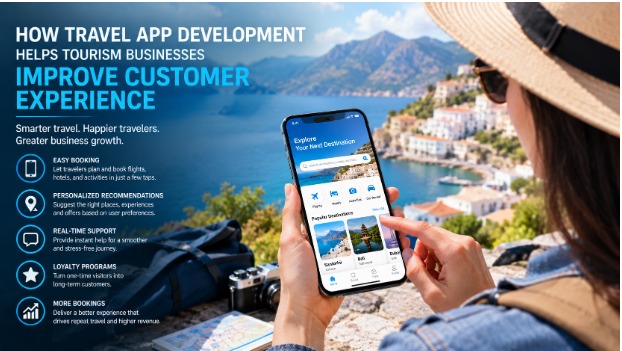
A guest who can open an app and see the day’s restaurant hours, pool opening time, spa availability, and local weather forecast has eliminated a category of questions they’d otherwise either call for or go without answering. A guest who can request room service, a wake-up call, or late checkout through an app request rather than a phone call has eliminated request friction that the call created without removing the service itself. The hotel staff still prepares the room service and arranges the late checkout. The guest experience of accessing those services is fundamentally different.
Pre-Arrival Engagement That Changes First Impressions
The guest experience doesn’t start at check-in. It starts when a guest begins thinking about their trip, and the businesses that extend their digital touchpoint into the pre-arrival period consistently produce better first impressions than those whose engagement begins at the front desk.
Pre-arrival apps and digital experiences allow hotels and tour operators to do several things that improve the arrival experience. Collecting preferences before guests arrive dietary restrictions, pillow type, preferred room temperature, welcome amenity choices allows the room or experience to be personalised in ways that guests notice and remember. Providing practical information arrival instructions, parking details, local transport options from the airport reduces the low-level anxiety of navigating an unfamiliar place that many travelers carry into their first interactions with a property.
The check-in process itself is where mobile technology has produced the most visible guest experience improvement in hospitality. Mobile check-in that allows guests to complete arrival formalities before they reach the property, and digital room keys that allow them to go directly to their room without stopping at the front desk, change the first impression from a queue and a form to a seamless arrival. For guests arriving after a long journey, the difference between waiting in a check-in line and walking directly to a ready room is significant enough to affect how they feel about the property for their entire stay.
In-Destination Experience Enhancement
Tourism businesses that offer activities, experiences, and services as distinct from accommodation have specific opportunities to use mobile technology to improve how guests discover, book, and experience those offerings.
Local experience providers walking tour operators, cooking class studios, water sports rental companies face a discovery challenge that mobile has partially addressed. Guests who might have discovered their offering through a hotel concierge or a printed brochure now discover through app marketplaces and digital booking platforms, but the quality of that discovery experience and the ease of the booking flow affects conversion rates in ways that are directly observable.
In-experience digital enhancements audio guides through a phone during a walking tour, AR overlays at historical sites that layer context onto physical locations, real-time translation for tour commentary produce experiences that a human guide alone cannot replicate for guests who don’t share a language or who want more depth than a group tour pace allows. These aren’t replacements for good human guides. They’re extensions of what the experience can offer without requiring the guide to be everything simultaneously.
Post-experience follow-up through a platform that makes it easy to share photos, leave a review, or book a return visit converts the enthusiasm that guests feel immediately after a positive experience into the review and referral behavior that drives future bookings. The gap between a guest who had a wonderful experience and a guest who left a review and shared a photo is largely a friction gap the businesses that make the next step easy capture the advocacy that the experience earned.
How Local Tourism Ecosystems Benefit From Connected Platforms
Tourism doesn’t happen in isolation. A guest visiting a destination typically engages with accommodation, dining, transportation, activities, and retail in combinations that no single operator controls or sees completely.
Destination management apps that connect the local tourism ecosystem allowing guests to discover restaurants, book activities, navigate transportation, and access local information through a single platform create value that individual operator apps can’t replicate. The guest who can manage their entire destination experience through one interface has a different experience of the destination than one who’s navigating between multiple booking platforms, recommendation engines, and information sources simultaneously.
The businesses that participate in these destination ecosystems gain visibility they couldn’t achieve through their own platforms alone. A small restaurant that operates within a destination app is discoverable to guests who would never have found their own standalone app or website. The network effect of connecting the ecosystem benefits participants in proportion to how much of the guest’s experience they can serve.
Choosing the Right Development Partner for Tourism Technology
When businesses are evaluating development options, the question of how to hire a mobile app development company specifically for tourism contexts deserves specific consideration, because tourism has requirements that generic app development experience doesn’t address.
Localisation for multi-language, multi-currency guest populations is a baseline requirement rather than a feature for most international tourism businesses. A hotel serving guests from forty countries needs an app that works correctly in the languages those guests actually speak, with the currency and date formatting conventions their home contexts use. Teams without international deployment experience frequently underestimate how much work real multilingual support requires beyond translating the string file.
Integration with property management systems, reservation systems, and the third-party booking platforms that feed occupancy is where most hospitality app builds hit unexpected complexity. The PMS integrations that are straightforward in theory have quirks in practice data schemas that don’t match what the app expects, APIs that are documented incompletely, rate and availability data that updates on schedules the app needs to account for. Development teams with hospitality integration experience have encountered these quirks before. Those without it encounter them on your project.
What the Portugal Hotel Group’s App Actually Did
Their app didn’t change the hotel. It changed how effortless it was to be a guest in it. Information that previously required a call was three taps away. Requests that previously required finding the right number and waiting for someone to pick up came through a request queue that staff managed on a tablet in the back office. The cooking class bookings that had been underperforming because guests didn’t know about them until they happened to ask at the front desk became visible and bookable from the first moment guests connected to the hotel’s network.
The front desk staff, freed from the volume of informational calls, spent more time on the genuinely personal interactions that guests remembered the local restaurant recommendation, the assistance with the unexpected problem, the conversation that made a guest feel seen rather than processed.
The satisfaction score improvement reflected something real: a hotel that had always been good at hospitality had removed the friction that was getting between its guests and the hospitality it was designed to provide. The technology didn’t create the warmth. It got out of the way of it.